Store a puff-print or rhinestone hoodie folded, not hung, with tissue or a soft cotton tee over the graphic, inside a breathable bag or drawer that stays cool, dry and dark. That's it. Most damage you'll ever see on these hoodies happens while nobody is wearing them.
Storage starts with a clean, completely dry hoodie. Put one away damp and you've built a small greenhouse for mildew right next to the print. If it needs a wash first, the rhinestone hoodie washing guide covers the cold, gentle routine that keeps glued stones attached, and the same low-heat logic protects puff print.
The Mechanism
Why Puff Print Cracks
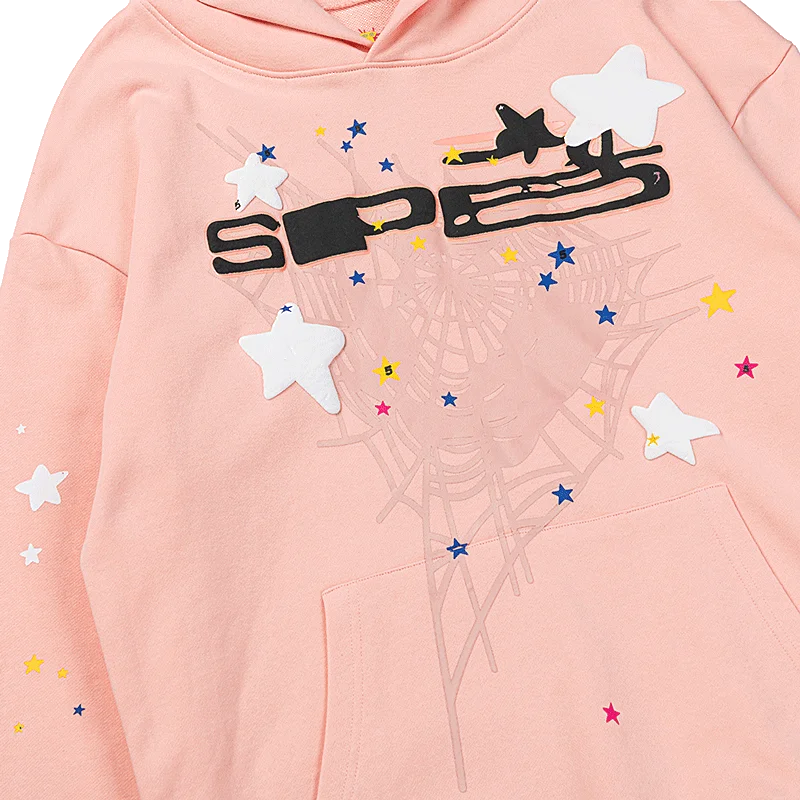
Puff print cracks when its raised ink layer gets stressed, and heat is the biggest stress of all. Qikink's print glossary describes puff ink as a plastisol or textile ink mixed with a heat-reactive additive that expands during curing, so the design rises above the fabric. That rise is the whole appeal. It's also a thicker, stiffer film than a flat print, sitting on fleece that wants to bend.
Puff letters and stars sitting proud of the fleece. The higher the print, the less it likes being bent.
AWDIS, the blank-garment maker, puts it plainly: cracking happens when a print on a T-shirt or hoodie becomes stressed, usually by heat. Its guide says high wash temperatures dry prints out and break down the bonds holding the ink together, recommends washing at 30°C or lower, and tells you to skip bleach and fabric softener. Those rules belong to laundry, but storage has heat problems of its own: a sunny shelf, a hot car, an attic in July.
The other stress is mechanical. A stiff raised layer folded at the same spot for a whole season is the obvious weak point, and that's my main worry with a puff hoodie in a drawer. The International Quilt Museum tells collectors to refold stored textiles periodically to minimize permanent creases and fold lines. Move the fold every few weeks and no single line of ink takes all the strain.
The Decision
Fold It or Hang It?
Fold a puff-print hoodie. London Screen Printers says to store puff print hoodies folded rather than hung, to prevent shoulder stretch and to keep the print from rubbing against other garments. Heavy fleece on a thin hanger slowly pulls the shoulders into points, and an oversized cut makes it worse because there's more weight below the hanger. The oversized fit guide explains why these hoodies carry so much fabric.
Start every fold from here: flat, face up, sleeves straight, tissue over the wordmark.
Fold so the creases miss the graphic. Lay the hoodie face up, put a sheet of tissue over the print, fold each sleeve back along the side seams, then fold the body in thirds lengthwise rather than in half across the chest. A fold straight through a puff wordmark is the one move to avoid.
Pad the folds you can't avoid. Winterthur's textile conservators pad folds with unbuffered acid-free tissue, or with a rolled undyed cotton item such as a pillowcase, towel or bed sheet. You don't need museum supplies. A rolled plain white tee inside the fold does the same job of keeping the bend gentle.
The Stones
Rhinestones in Storage
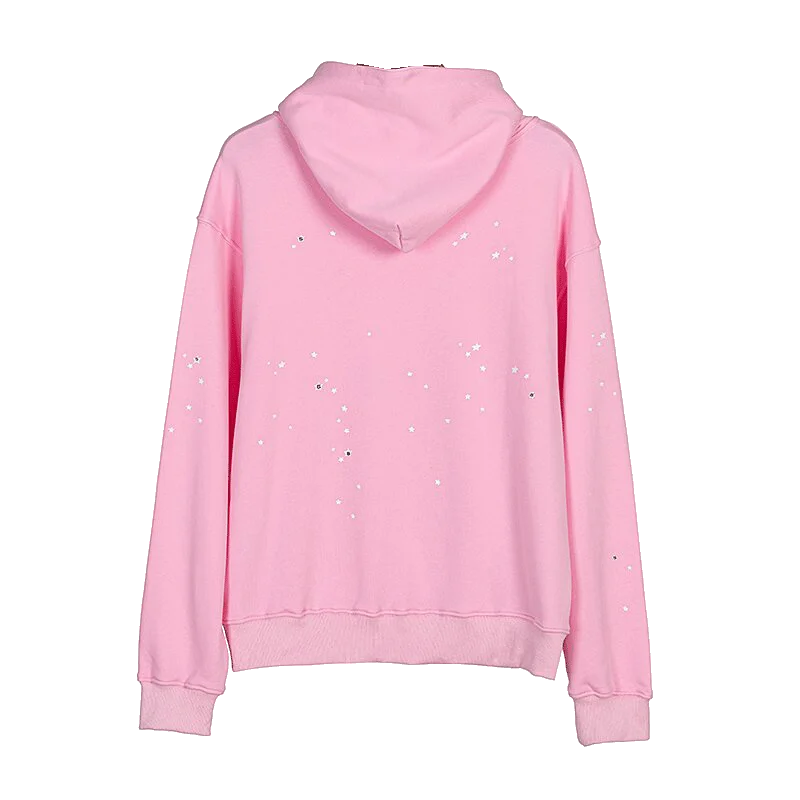
A rhinestone hoodie needs its own space more than anything else in storage. Crystal Parade, a rhinestone supplier, recommends a breathable bag so the stones can't rub against other items, laying pieces flat where possible, and keeping them out of sunlight to avoid colour fading. Of those three, rubbing is the one people forget.
Stones spread across the whole back. Stack a pair of jeans on this and every one of them takes the pressure.
Keep a rhinestone hoodie on top of the pile, never underneath. An old pillowcase works fine as the breathable bag, and it's free. If a stone does come off, keep it in a small envelope in the same drawer, because a matching spare is the hard part of a repair. Shedding after normal storage can point to weak setting, and the legit check guide covers other construction tells.
The Spot
Where to Keep It
Keep a printed hoodie somewhere with steady, room-level conditions. The International Quilt Museum recommends 62°F to 72°F and 45 to 55 percent relative humidity for textiles, says all light fades and weakens them, and tells you to avoid attics, basements, kitchens, laundry rooms and unheated spaces. A bedroom closet or dresser drawer usually beats every other option in the house.
Skip the sealed plastic bag. The Heinz History Center says textiles need to breathe and asks people not to store them in plastic bags, which trap whatever moisture is left in the fleece. A lidded bin is a separate case: Winterthur calls polyethylene plastic bins a cost-effective choice for home collectors. Line the bin with a clean cotton sheet and don't vacuum-seal anything with puff print, since compression is just another kind of fold.
The Routine
Storage Checklist
This storage checklist covers both puff print and rhinestones, because most pink Sp5der style hoodies carry more than one kind of decoration. Work down the left column and stay out of the right one.
Step
Do This
Skip This
1. Prep
Clean and fully air dried, no damp spots in the cuffs or hood
Storing it straight off the radiator or still damp
2. Cover
Tissue or a plain cotton tee laid over the print and stones
Print touching print, stones touching zips
3. Fold
Sleeves back, body in thirds, creases off the graphic
A hard fold through a puff wordmark
4. Bag
Cotton bag or pillowcase, one hoodie each
Sealed plastic bags, vacuum bags
5. Place
Top of the pile, in a closet or drawer that stays dark
Attic, basement, car trunk, sunny shelf
6. Refold
Shift the fold lines every few weeks in long storage
The same crease for an entire season
The checklist applies to the bottoms too. Matching sweatpants often carry a puff wordmark down the leg, so fold them with tissue along the print, as covered in the pink Sp5der sweatsuit guide. And when the hoodie comes out of storage looking exactly like it went in, the pink Spider outfit formulas are the next stop.
FAQ
Storage Questions
Is it better to fold or hang a puff print hoodie?
Fold a puff print hoodie. London Screen Printers advises storing puff print hoodies folded rather than hung, to prevent shoulder stretch and to keep the raised print from rubbing against other garments. Lay a sheet of tissue over the graphic first so the fold never presses print onto print.
Can you store a hoodie in a plastic bag?
No, a sealed plastic bag is a poor home for a hoodie. The Heinz History Center says textiles need to breathe and should not be stored inside plastic bags. A cotton bag, a pillowcase or an open drawer lets moisture escape. A clean plastic bin is a different case, and Winterthur calls polyethylene bins a cost-effective option for home collectors.
Can you fix puff print that is cracking or lifting?
A crack in puff print cannot really be undone, but a lifting edge can sometimes be pressed back down. London Screen Printers suggests low heat from the reverse side of the fabric with a cloth barrier, tested on a hidden area first. Stop there, because more heat is what cracks puff print in the first place.